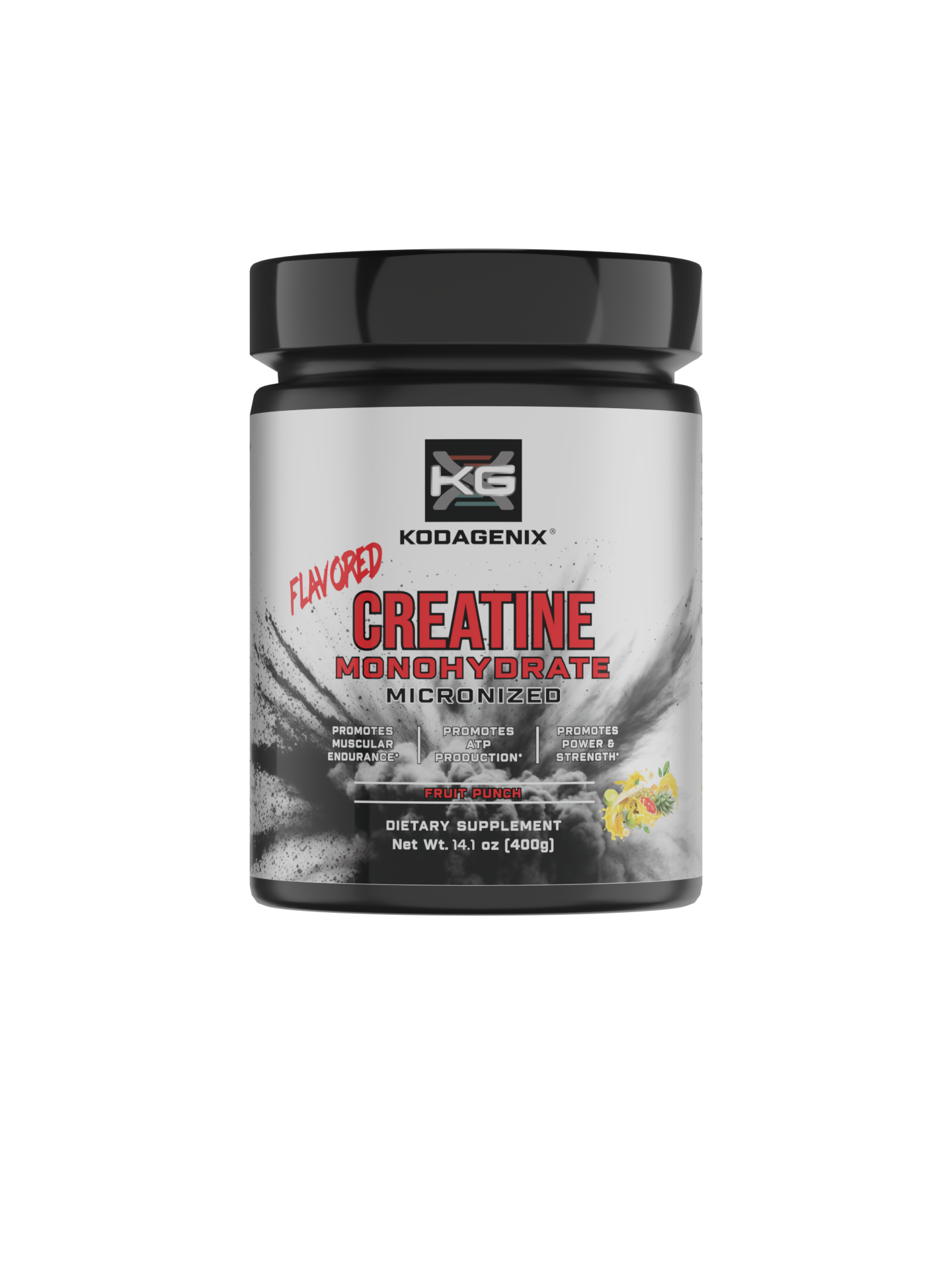
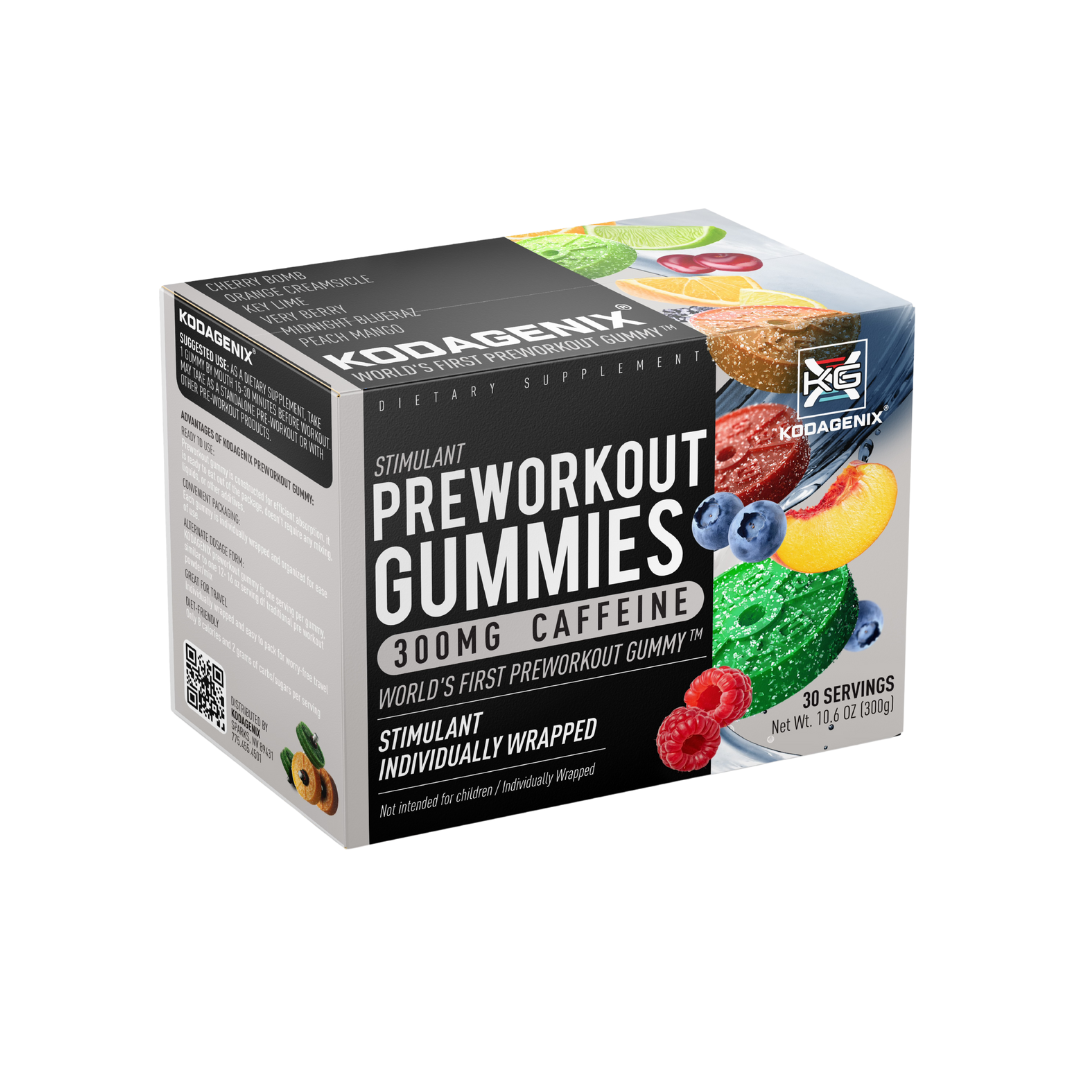
A gummy makes preworkout easy to carry, but its size and flavor do not tell you how much is inside. Before comparing boxes, read the serving size, caffeine amount and directions together. Here is a practical way to do that with a product page open beside you.
Start with one complete serving
Kodagenix’s 30-count box contains 30 individually wrapped gummies. Its published serving size is one gummy (10 g), containing 300 mg caffeine. That makes 30 labeled servings per box. These are supplements for adults 18+, not ordinary candy.
Do not transfer the directions from another brand to this box. “One gummy” is a physical unit; a serving is the amount defined by that exact product’s label. When a different product uses several pieces per serving, compare the complete serving rather than the number on the front.
Open the current gummy product details and directions
Read caffeine in milligrams, not by gummy size
Caffeine deserves its own check before you choose a preworkout. FDA notes that sensitivity varies with factors including medications and medical conditions. Its general reference of 400 mg per day for most adults is not a target, a guarantee of safety for everyone, or permission to exceed a product’s directions.
Kodagenix’s product page says to avoid combining the gummies with other caffeine sources. Check coffee, energy drinks and other supplements as well as the gummy label. If you are uncertain whether a caffeinated supplement is appropriate for you, discuss it with a qualified healthcare professional before use.
Make a five-line label note
1. Exact product: record the product name, package count and version you are comparing. Use the label for the product you will actually receive.
2. Serving: write down the number of gummies in a serving and the labeled serving weight. Keep these separate from the total package weight.
3. Ingredients: record the named ingredients and their amounts per complete serving. Read the other ingredients too, especially anything you personally need to avoid.
4. Directions and warnings: check who the product is intended for, when to take it, the daily limit, storage instructions and cautions. A front-of-box slogan does not replace these details.
5. Cost: divide the current price by the labeled serving count. Use the same basis for both products, and then compare their formulas. Equal cost per serving does not mean equal ingredients or results.
Three numbers that are easy to confuse
30 gummies is the package count. 10 g is the weight of one complete gummy serving. 300 mg is the stated caffeine amount within that serving. They describe different things: pieces, total serving weight and one ingredient. The 10 g serving weight is not a claim of 10 g of active ingredients.
Units matter too: 1 g equals 1,000 mg, and 1 mg equals 1,000 mcg. For a unit-checking example, 300 mg equals 0.3 g. Converting units helps you read a panel; it does not change the labeled serving or justify taking more.
A worked comparison without changing the directions
Imagine a different product whose label says three gummies per serving and 150 mg caffeine per serving. That is 50 mg per piece, but the labeled serving is still three pieces. Comparing its 150 mg full serving with a 300 mg full serving answers a different question from comparing single pieces. This is an arithmetic example, not another Kodagenix product or a dosing recommendation.
Use a note with four columns: product name, pieces per labeled serving, caffeine per labeled serving, and directions or warnings to check. Copy each value from the same product’s panel. If a figure is missing or unclear, ask the manufacturer rather than estimating from another brand.
Compare the preparation steps in our gummies-versus-powder guide
Two questions worth asking
Does a 30-count box mean 30 days of use? It describes 30 gummies and, for this product, 30 labeled servings. It does not tell you that daily use is appropriate or replace the label’s directions.
Does an ingredient name prove a finished product’s results? No. Check what was actually studied, including the ingredient form, amount and participants. A paper about an ingredient is not automatically a trial of a particular gummy formula.
For a broader shopping checklist, compare capsules, gummies and powder
Product details checked November 19, 2026. Read the complete label on the product you receive. This article explains label comparisons and is not personal medical advice.